How UX Design Improves SEO: Why User Experience Matters for Search Rankings

VIVEK S.L · July 3, 2026

When people think about SEO, they often think about keywords, backlinks, and content. While these are important, they are only part of the equation.
Search engines aim to deliver the best possible experience to users. That means a website that is fast, easy to navigate, mobile-friendly, and provides valuable content has a better chance of performing well in search results.
This is where UX design and SEO intersect.
What Is UX Design?
User Experience (UX) Design focuses on creating digital experiences that are intuitive, efficient, and enjoyable. Every interaction—from landing on a page to completing a purchase—should feel effortless.
Good UX design helps users achieve their goals with minimal friction.
How UX Affects SEO
Search engines don't just evaluate content—they also evaluate the quality of the experience users have on your website.
Here are some of the ways UX design influences SEO.
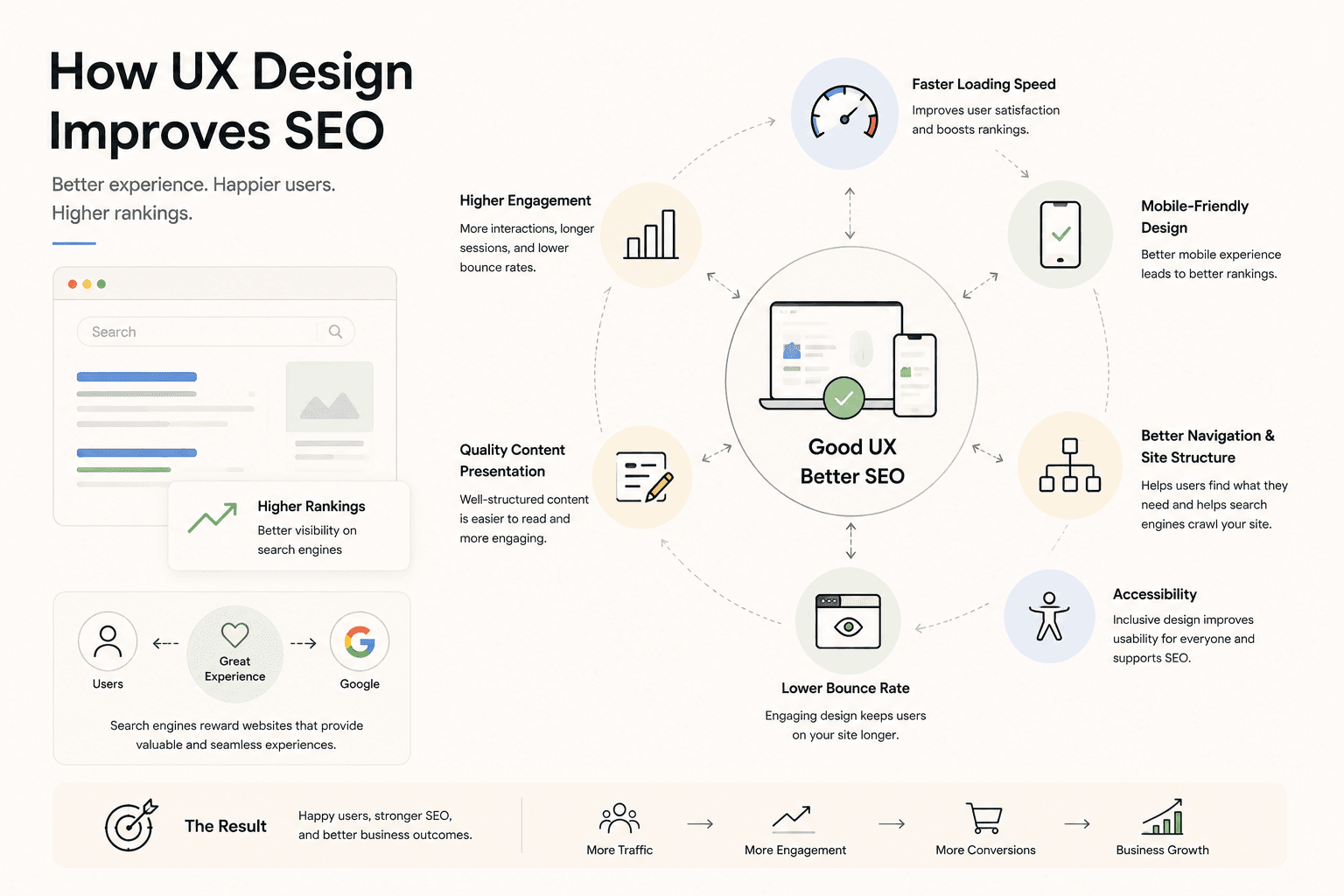
1. Faster Websites Improve Rankings
Page speed is one of the most important ranking signals.
Slow-loading websites increase frustration, causing users to leave before the page has fully loaded. Optimizing images, reducing unnecessary scripts, and improving performance can significantly improve both user satisfaction and search visibility.
2. Better Navigation Helps Users and Search Engines
A clear information architecture makes it easier for visitors to find what they're looking for.
Well-structured navigation also helps search engines crawl and understand your website, improving the visibility of important pages.
3. Mobile-Friendly Design Is Essential
Most web traffic now comes from mobile devices.
Responsive layouts, readable typography, and touch-friendly interfaces create a better experience for users while supporting stronger search performance.
4. Helpful Content Keeps Users Engaged
Design isn't only visual—it's also about presenting information clearly.
Well-organized content with descriptive headings, concise paragraphs, and meaningful visuals encourages visitors to stay longer and explore additional pages.
5. Accessibility Benefits Everyone
Accessible websites are easier to use for people with different abilities and often follow best practices that improve usability for all visitors.
Clear labels, sufficient color contrast, keyboard navigation, and descriptive alt text contribute to a better overall experience.
UX Metrics Worth Monitoring
Improving user experience starts with measuring it.
Useful metrics include:
- Engagement Time
- Bounce Rate
- Conversion Rate
- Scroll Depth
- Core Web Vitals
- Page Load Speed
- Task Completion Rate
Tools such as Google Analytics, Microsoft Clarity, and Search Console can help identify opportunities for improvement.
A Simple UX and SEO Workflow
Research Users
      ↓
Analyze Analytics
      ↓
Identify Friction
      ↓
Improve UX
      ↓
Measure Performance
      ↓
Iterate Continuously
Rather than making changes based on assumptions, use real user behavior to guide design decisions.
Best Practices for Better UX and SEO
- Design mobile-first experiences.
- Create a clear and consistent navigation structure.
- Improve page loading performance.
- Write descriptive page titles and headings.
- Optimize images without sacrificing quality.
- Make forms simple and easy to complete.
- Use internal links to guide users through your content.
- Regularly test your website with real users.
Final Thoughts
Great SEO is no longer just about ranking higher—it's about creating experiences that users genuinely value.
A fast, accessible, and user-friendly website not only improves search visibility but also builds trust, increases engagement, and drives more conversions.
When UX design and SEO work together, businesses create websites that are easier to discover, easier to use, and more effective at achieving their goals.